Collaboration that shifts power

The most powerful funding is built on genuine partnership: between funders and communities, and between funders working with one another. When those relationships are open, trusting and long-term, resources go further, commitment deepens and real change becomes possible. Funders Together exists to create and support the conditions that make that possible: through infrastructure, shared learning and a growing community of funders committed to working differently.

Why now?
The challenges communities face today, rising inequality, the fracturing of social trust, the climate emergency, the concentration of wealth and power, are not challenges any single funder can meet alone. The scale of what is needed requires funders to act collectively. Research from the Joseph Rowntree Foundation, published in 2024, found that the UK funding landscape is shifting. Pooled funds are becoming an increasingly prominent feature in UK philanthropy as a tool for funders grappling with the need to collaborate and the desire to disrupt entrenched power structures. There is also a growing acknowledgement that the funding system itself can reinforce inequality. Too often, models of grant-making are designed around the needs of funders rather than the people and communities they exist to serve. Changing that requires the sector to change together.
“We cannot ignore the scale of the shared challenges we face. We need to rethink how we respond as funders. And to do this we have incredible shared resources between us, and that is not just the financial ones, but communities' expertise and knowledge about the solutions."
More about Collaboration Circle
A track record of coming together
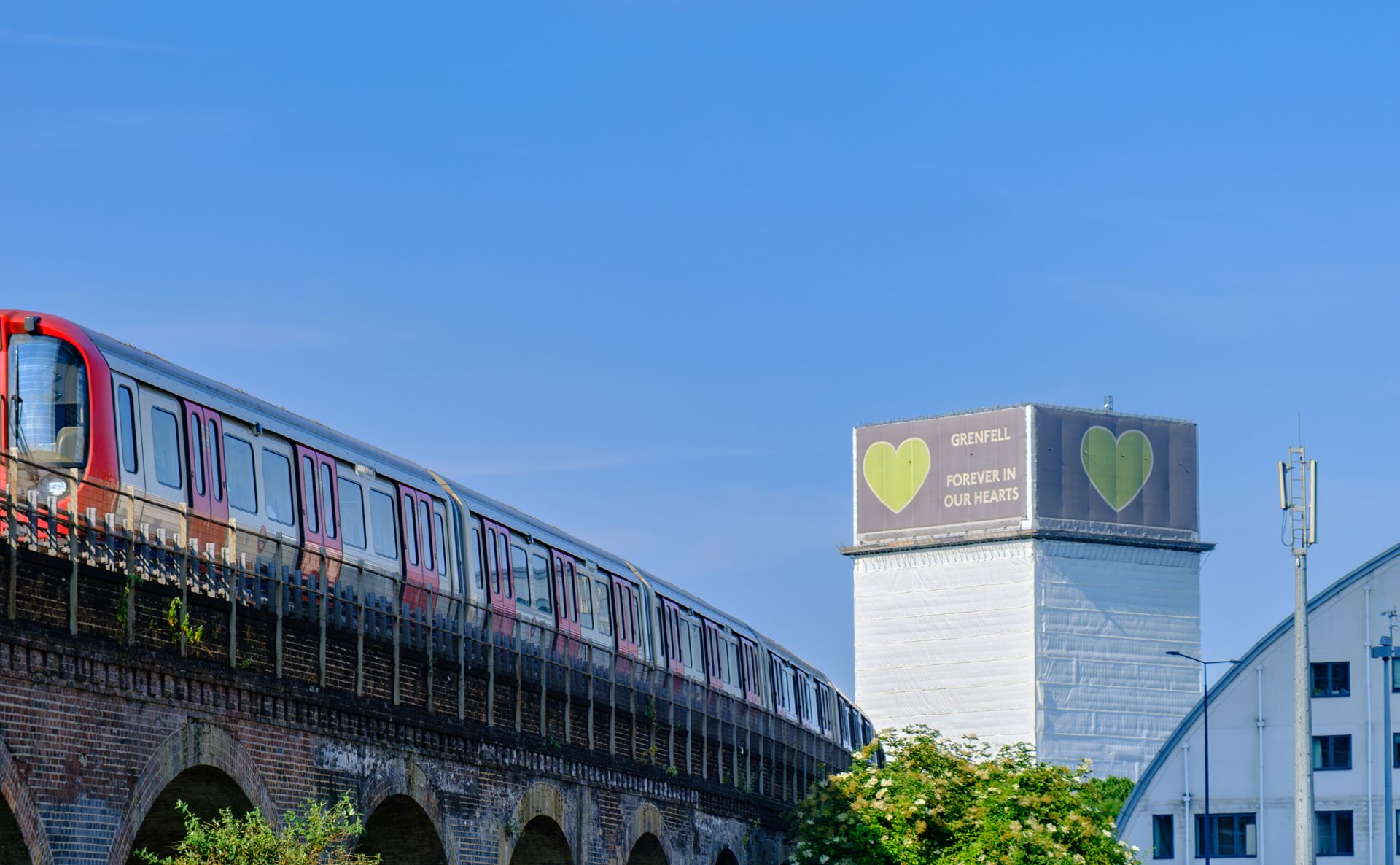
Funders Together has been building that infrastructure for decades, through the patient work of earning trust across organisations that do not always operate in the same way. When the Grenfell Tower fire devastated the local community in 2017, funders across London came together to distribute 4.7 million pounds in coordinated support across five collaborative programmes. Independent research commissioned by London Funders found that what made the response work was being straightforward for the community: easy, quick and trusting. Funders who took part came away asking why they could not always work like that. When the Covid-19 pandemic hit, 67 funders formed the London Community Response, distributing over £57 million through more than 3,300 grants to the communities hit hardest. Again, the networks, relationships and the trust built over the years made rapid, coordinated action possible in ways that would have been impossible without them. These were not simply philanthropic responses to crisis. They were demonstrations of what the funding sector is capable of when it sets aside individual agendas and acts together. They generated a shared question: how do we make this the norm?
“After working on the London Community Response, it was possible to really see the huge potential of funders and equity groups working together in a new way."
Pooling funding, sharing power
Propel built on that foundation. Launched as a ten-year, £100 million collaboration, Propel exists to give London's civil society the flexibility, trust and long-term investment needed to tackle the city's deepest inequalities. It prioritises organisations led by and for the communities experiencing structural inequality. It funds systems change, not just service delivery. In January 2026, eleven organisations working across youth opportunity, disability justice, racial equity, gender justice, mental health and community strength received over 10.2 million pounds in long-term grants through Propel's Long-Term Grants Programme. Grants run for up to seven years. At least 85 percent of funding in the first cohort went to organisations led by and for the communities they serve. Grants run for up to seven years and are accompanied by relational grant management focused on learning and adaptation rather than compliance-heavy reporting. Organisations closest to the issues are trusted to lead the response. The infrastructure that makes this possible is Collaboration Circle, which launched in May 2024. Collaboration Circle creates a space where funders pool money and, critically, share decision-making with civil society partners in equal number. Its board brings together representatives from the funding and social justice sectors on the same terms. Funding and civil society design the programme together, not in sequence.

“Collaboration Circle is providing a neutral space where new and innovative ideas, practices and culture can thrive, outside the limits of entrenched barriers that may exist within individual partner organisations. The collaborations have the potential to generate new learning that can help transform the wider grant-making landscape."
The evidence behind the approach
Across the UK and internationally, the evidence points in the same direction. The JRF research found that pooled funds allow funders to act in ways that would be too risky for them to undertake alone, to tackle issues at scale, and to bring in the expertise and knowledge of communities alongside financial resources. The most effective pooled funds embed equity and community voice at every level of governance, from design through to decision-making. In Edinburgh, the Regenerative Futures Fund is a £15 million, ten-year pooled fund that was co-designed between 2022 and 2024 by community organisations, people with lived experience of poverty, funders and the local authority. Its commitment to putting decision-making power in the hands of those most affected by poverty and racism represents a model for what community-led collaborative funding can look like at a city scale. Internationally, the Trust-Based Philanthropy movement, which has now influenced hundreds of foundations across the United States and beyond, found that making changes to practice is relatively straightforward. The harder and more important shift is in mindset and culture: funders relinquishing individual power to achieve a more equitable and democratic approach to how resources are directed. In 2025, responding to funding rollbacks and political uncertainty, more than 70 foundations signed a public commitment to move in solidarity with communities through trust-based practices. The Global Fund for Children's 2025 impact study, drawing on participatory research with partners across multiple countries, found that flexible funding, non-financial support and trusting relationships are the factors that most consistently enable community organisations to grow, adapt and create meaningful change.
“Collaboration Circle offers us the opportunity to match the scale of the challenge before us with the scale of response needed."

Funding rooted in place
Some of the most significant shifts in how funding works happen at a hyperlocal level, when funders commit to understanding and responding to the specific needs of a place, working with the people who know it best. Place-based giving is a model built on exactly that premise. Across more than half of London's boroughs, place-based giving schemes bring together local people, businesses, community organisations and funders to direct resources toward what communities themselves identify as priorities. Since 2012, London Funders has supported these schemes. In the past five years alone, they have distributed over 25 million pounds to grassroots groups, engaged more than 13,000 people through collaborative projects and funding rounds, and helped build the kind of local alliances that outlast any individual grant. The Centre for Place-Based Giving, established as part of Funders Together, is building on this foundation to develop a national model for what this approach can become. It connects the learning from place-based giving across London with a growing set of relationships and partnerships across regions and nations, making it possible for the model to travel.
Place-based giving schemes have distributed over 25 million pounds to grassroots groups
Place-based giving schemes have engaged more than 13,000 people through collaborative projects and funding rounds
Place-based giving schemes have engaged more than 13,000 people through collaborative projects and funding rounds
What this means for the future
Funders Together has built a practical, working infrastructure for collaborative funding that genuinely shifts power toward communities. Collaboration Circle can host funding collaborations of different sizes, across different sectors and geographies, from hyperlocal to national and international. It is designed to grow, expand and scale. Propel is demonstrating what long-term, trust-based, equity-led funding looks like in practice. Place-based giving is showing what happens when communities lead. The evidence is clear and the momentum is real. The question now is how to build the relationships, governance and shared commitment that make this kind of collaboration possible at greater scale. Funders Together is here to help make that easier.
Explore the work
- Collaboration Circle: pooled funding and shared decision-making
- Propel: long-term collaborative funding for systems change in London
- London's Giving: place-based giving across London's boroughs
- London Funders: enabling funder collaboration
- JRF: Shifting Power, exploring pooled funds in the UK
- The possible, not the perfect: learning from funder responses to emergencies (IVAR)